From April 11 to 14, 2026, a research team from the School of Information and Communication Engineering (SICE) at UESTC successfullycaptured, demodulated, and reconstructed Slow-Scan Television (SSTV) signalstransmitted from the International Space Station (ISS). The team was guided by Associate ProfessorLin Gao, Associate Research FellowsWeibo HuoandLiang Liu, and comprised Dr.Yongwei Zhang, PhD candidatesLiangliang Li,Yang Luo, andYuhang Zhang, alongside master’s studentMingchang Li. Utilizing a custom-built broadband receiver funded by a national-level project, the teamachieved high-quality signal reception results, andwas awarded an official commemorative mission certificate by Amateur Radio on the International Space Station (ARISS) in recognition of its accomplishment.
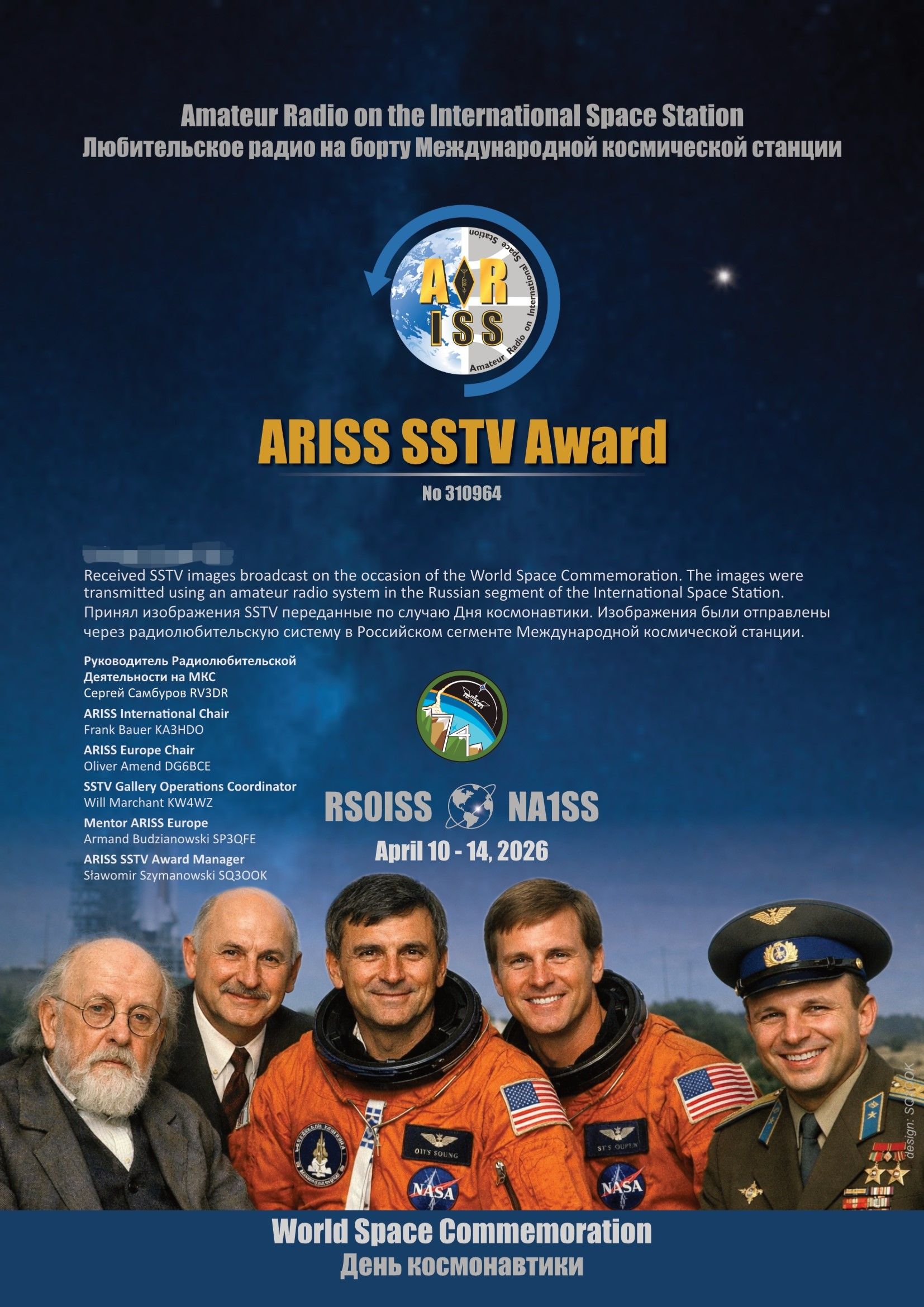
Honorary certificate
Because the ISS operates in low Earth orbit at an altitude of approximately 400 kilometers and travels around the Earth at a speed of 7.66 km/s, the reception mission presented multiple technical challenges, includingDoppler frequency shift, signal attenuation at low elevation angles, and background noise interference. The station’s rapid movement can produce Doppler frequency offsets of up to ±10 kHz, requiring precise real-time compensation. During several of the ISS passes over Chengdu in April, the satellite’s elevation angle dropped below 10 degrees, significantly increasing signal transmission loss. In addition, because the SSTV signals transmitted by the ISS are inherently weak, successful decoding required precise matching between the transmission mode and the receiver parameters.
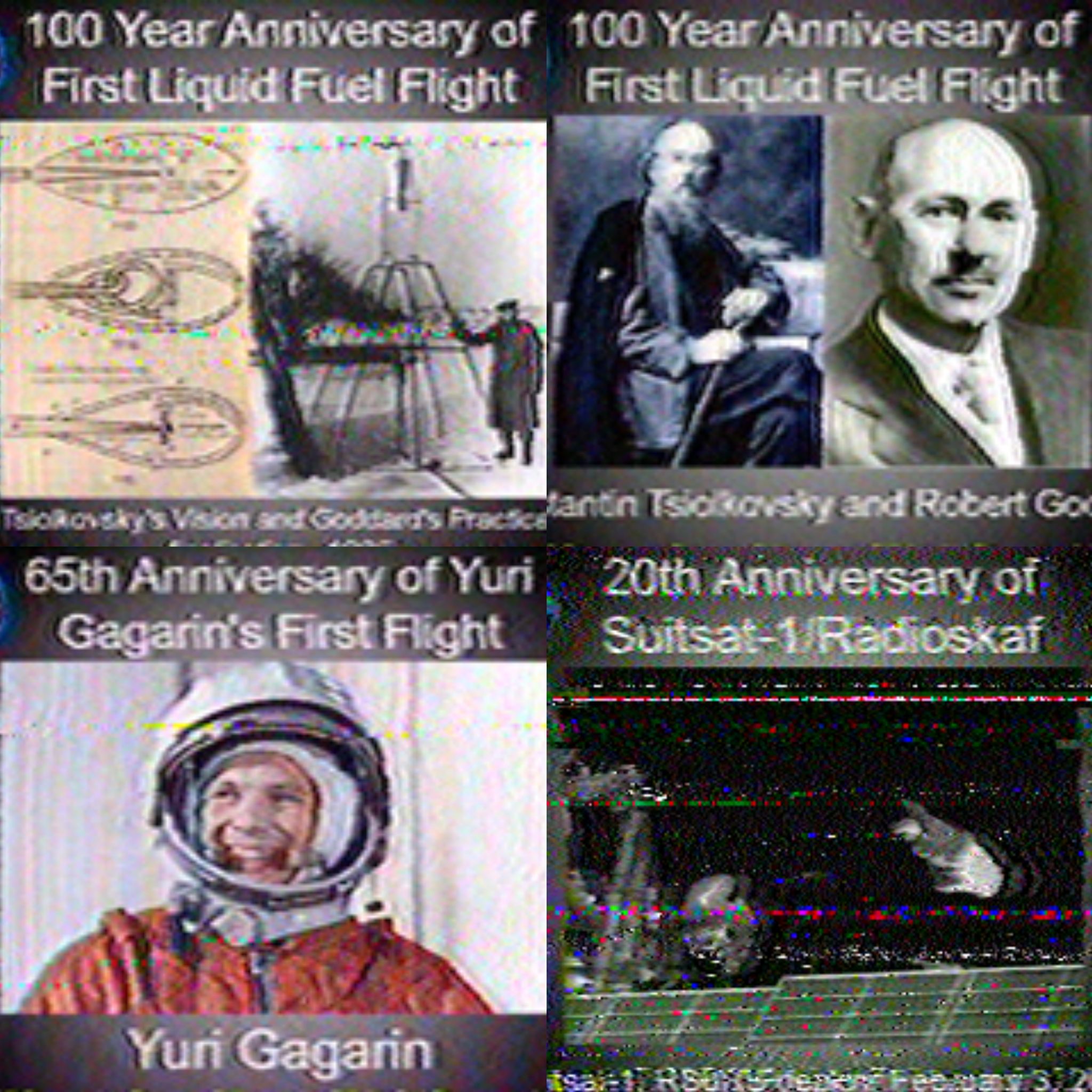
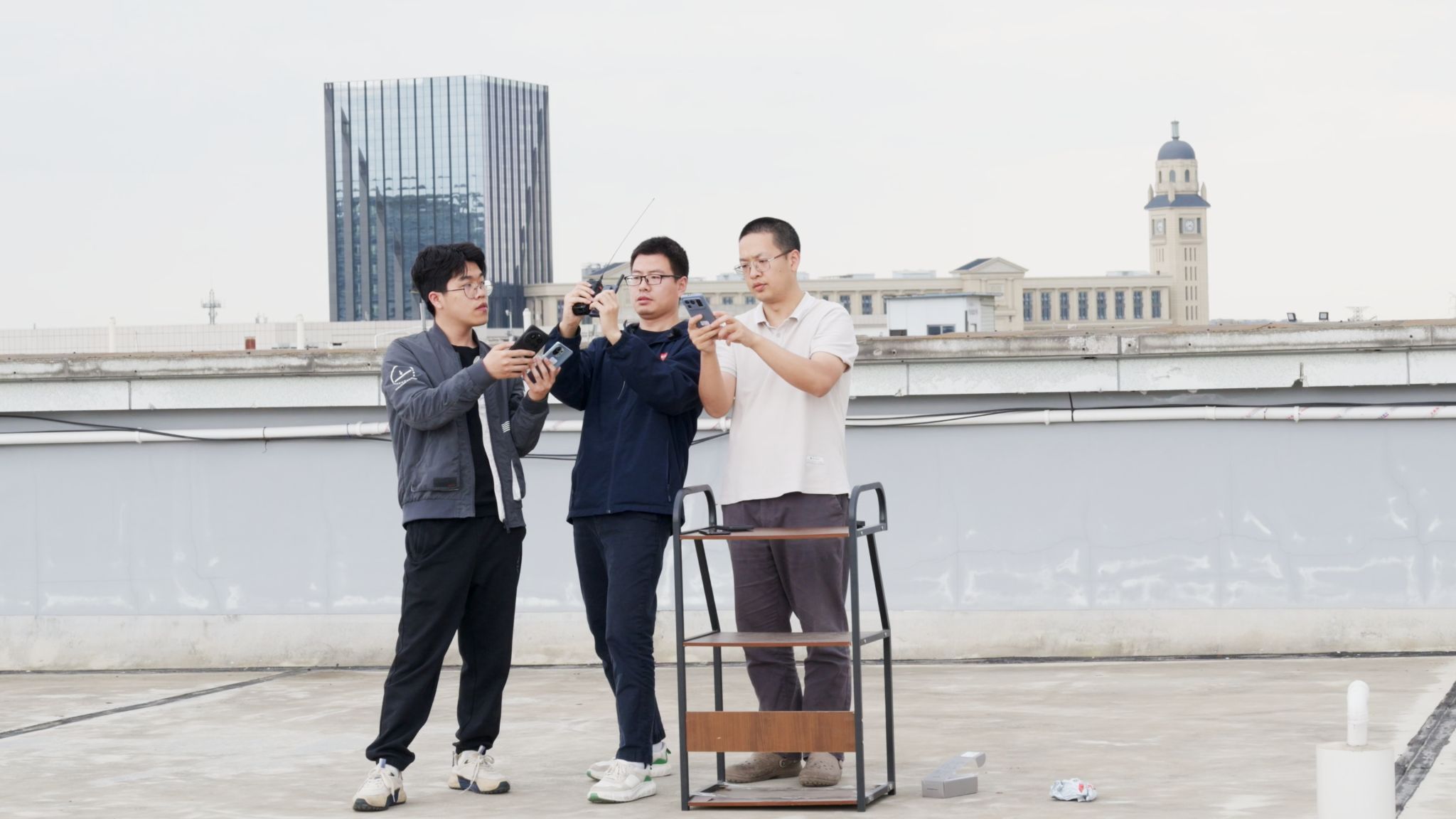
Under the guidance of Associate Professor Lin Gao, Associate Research Fellow Weibo Huo, and Associate Research Fellow Liang Liu, the team identified the experimental window in advance by consulting ISS pass predictions and elevation data. Usingthis custom broadband equipment, the team established a dedicated signal interception link. With the aid of theLook4Satsoftware, the team completed satellite orbit tracking and ephemeris import, while relying onLosehu Doppler-shift firmwareto perform real-time calculations of the satellite’s azimuth, elevation, Doppler frequency offset, and line-of-sight distance between the satellite and the ground station. Furthermore, the team further optimized reception quality through self-developed algorithms for intelligent noise reduction, Doppler compensation, demodulation processing, and image restoration. Ultimately, using theRobot36image decoding software, the team successfully demodulatedsixcomplete space-themed images, all of which met the ARISS official application standards for image clarity and completeness.
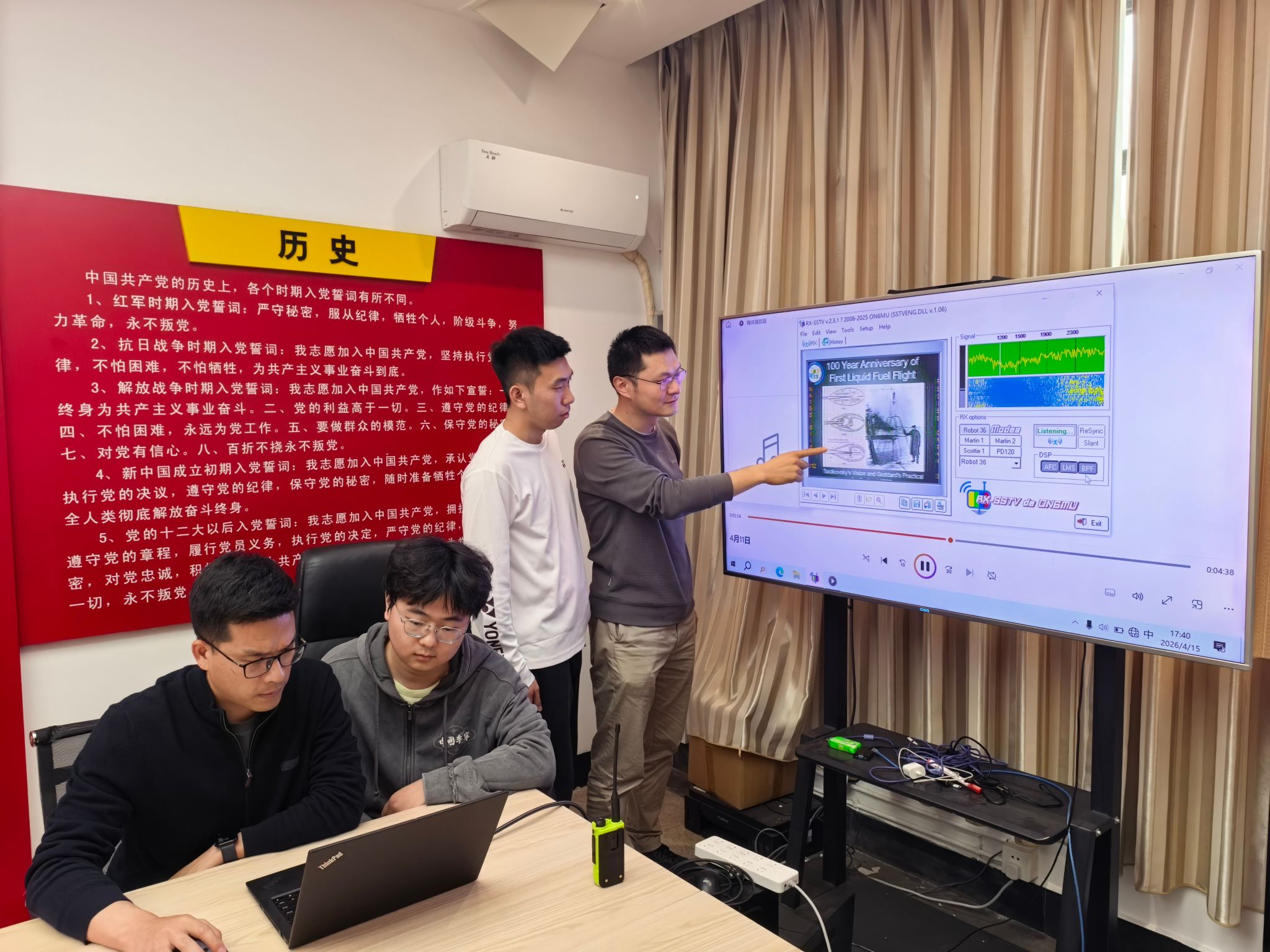
Satellite signal reception
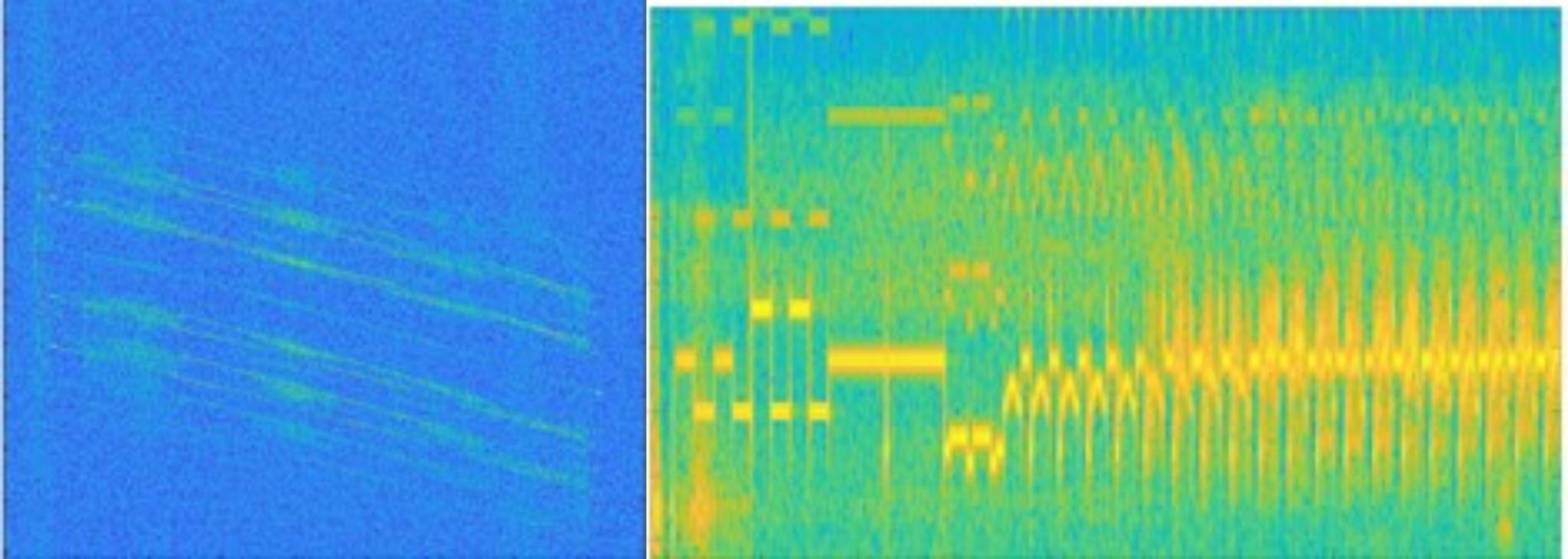
Signal processing and data analysis
Time-frequency diagrams before and after signal processing
Partially demodulated SSTV pictures
As one of the few university teams in China to have successfully participated in the ISS SSTV activity, the UESTC team’s accomplishment provides a valuable reference for aerospace science outreach and hands-on teaching in electronic information engineering at Chinese universities. The successful reception of the signals and the subsequent recognition by ARISS also highlight the solid professional competence and international perspective demonstrated by UESTC students in the fields of aerospace information acquisition and amateur radio technology.