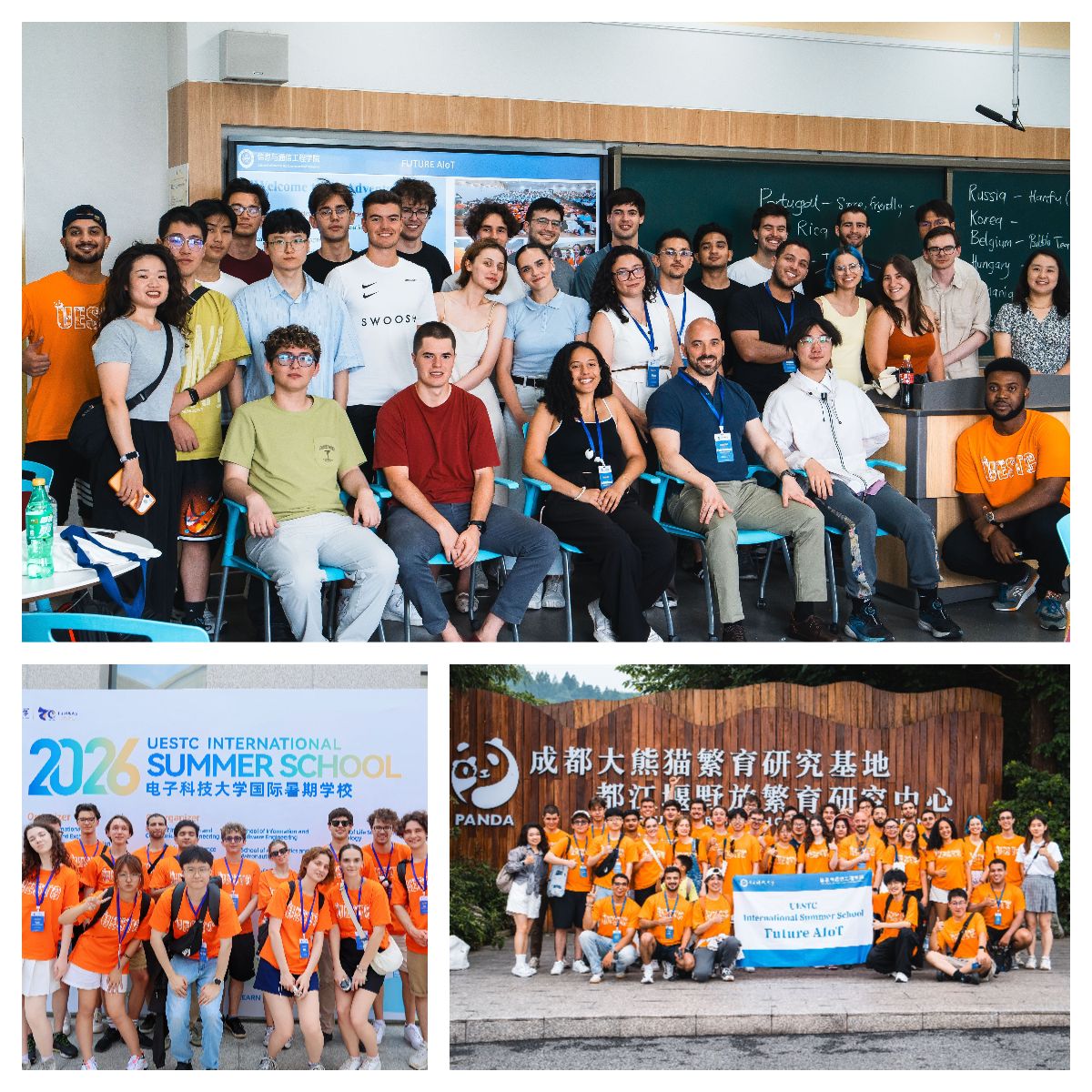
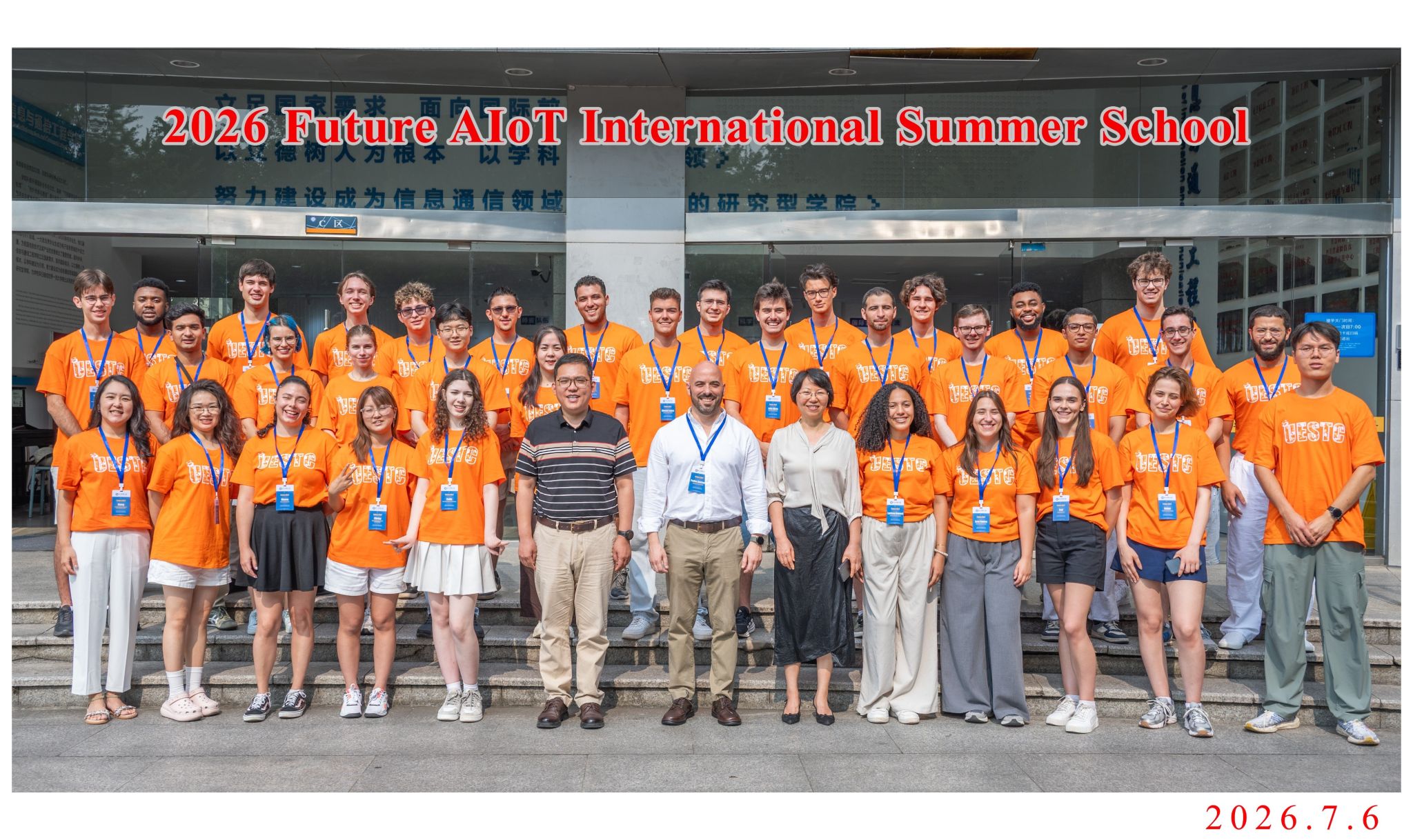
From July 4 to 18, 2026, the “Future AIoT”-themed International Summer School officially concluded at the Qingshuihe Campus. Hosted by the School of Information and Communication Engineering, the two-week program brought together 30 outstanding students from over ten countries—including Portugal, Spain, the Netherlands, the United Kingdom, Costa Rica, and Singapore—for a series of academic and cultural activities centered on cutting-edge AIoT technologies and cross-cultural exchange.
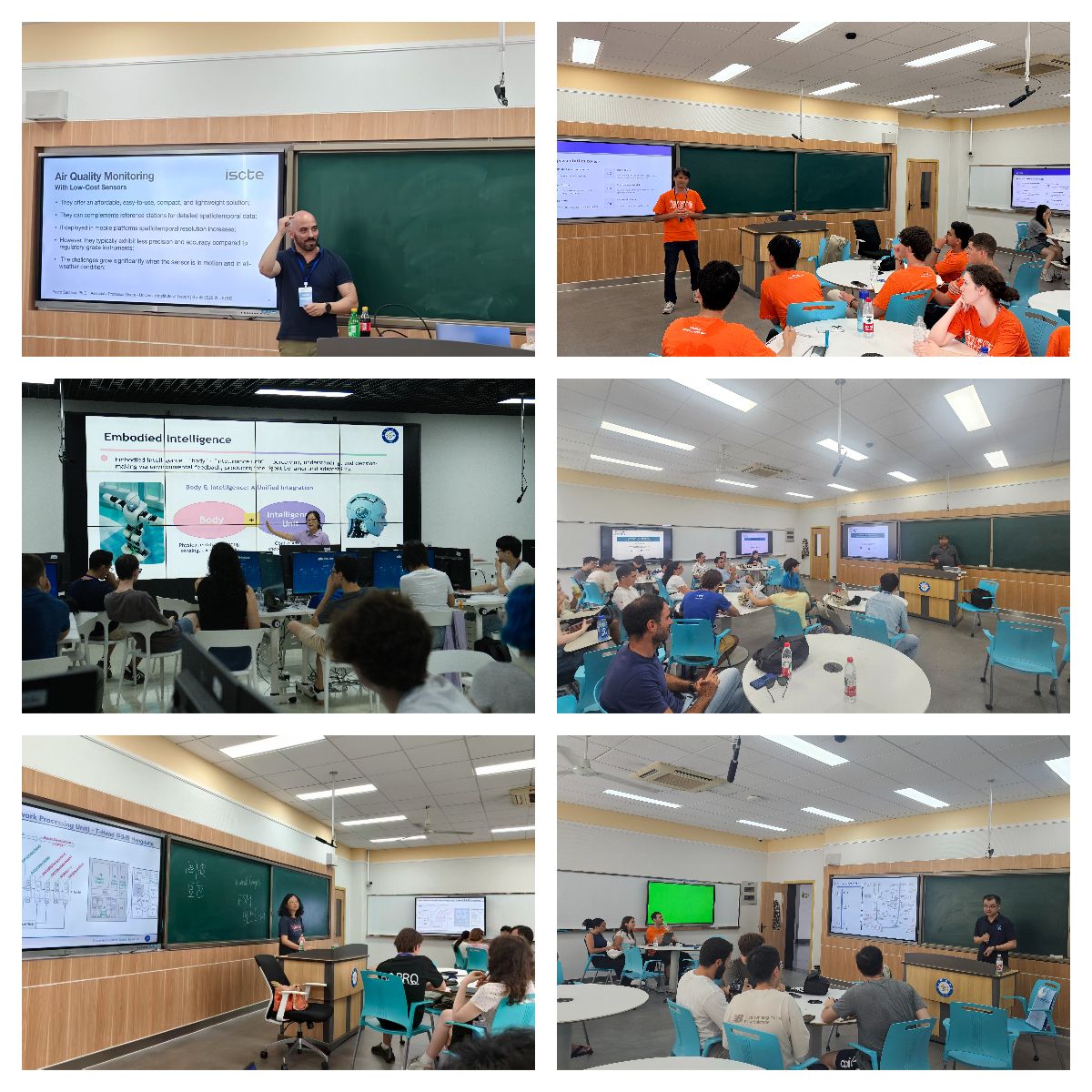
Rigorous Academics: A Full-Stack Exploration from AI Chips to Intelligent Robots
This year’s summer school closely aligned with the theme of “Future IoT and Artificial Intelligence Technologies,” offering a well-structured curriculum that deeply integrated theory with practice. While retaining classic modules from previous years, the program also made new strides in interdisciplinary learning.
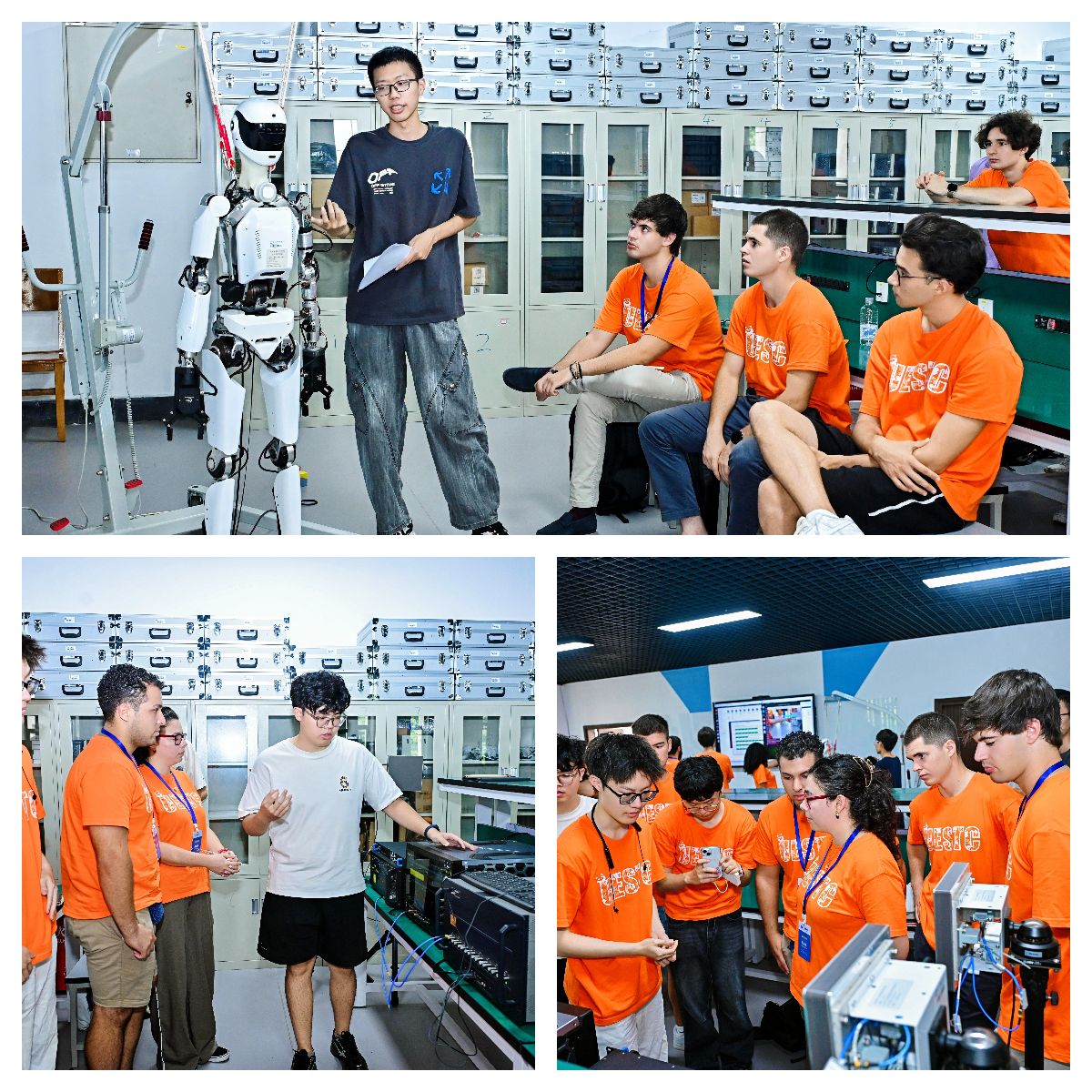
In the domain of AI chip design, participants joined Professor Yan Bo for a three-day intensive series of lectures and labs on “AI for AI-Chip Design.” From architectural principles to hands-on implementation, students completed high-intensity project design and practical training in the laboratory. In frontier algorithms, IEEE Fellow Professor Vishal Monga from Pennsylvania State University delivered a lecture titledAlgorithm Unrolling: Explainable Learning with Guarantees, while UESTC’s Professor Liu Shuaicheng shared the latest advances in large AI models, opening new windows into explainable AI and general-purpose artificial intelligence for the students.
Notably, the newly introduced module on intelligent robots and information processing stood out as a highlight. Students engaged in in-depth study and discussion on the topic “Intelligent Robots and AI Information Processing & Communication.” From theoretical modeling to communication protocol analysis, participants gained practical experience that deepened their understanding of robotic perception and decision-making mechanisms in complex environments, further strengthening the application foundation of AIoT technologies at the edge. Additionally, Associate Professor Pedro Santana from Iscte – University Institute of Lisbon, Portugal, and IEEE Fellow Professor Antonio De Maio from the University of Naples Federico II, Italy, delivered specialized talks on vehicular sensor networks and maritime surveillance and localization technologies, broadening students’ international perspectives in the field of ubiquitous sensing.
Cultural Exchange: Experiencing China Through Immersive Activities
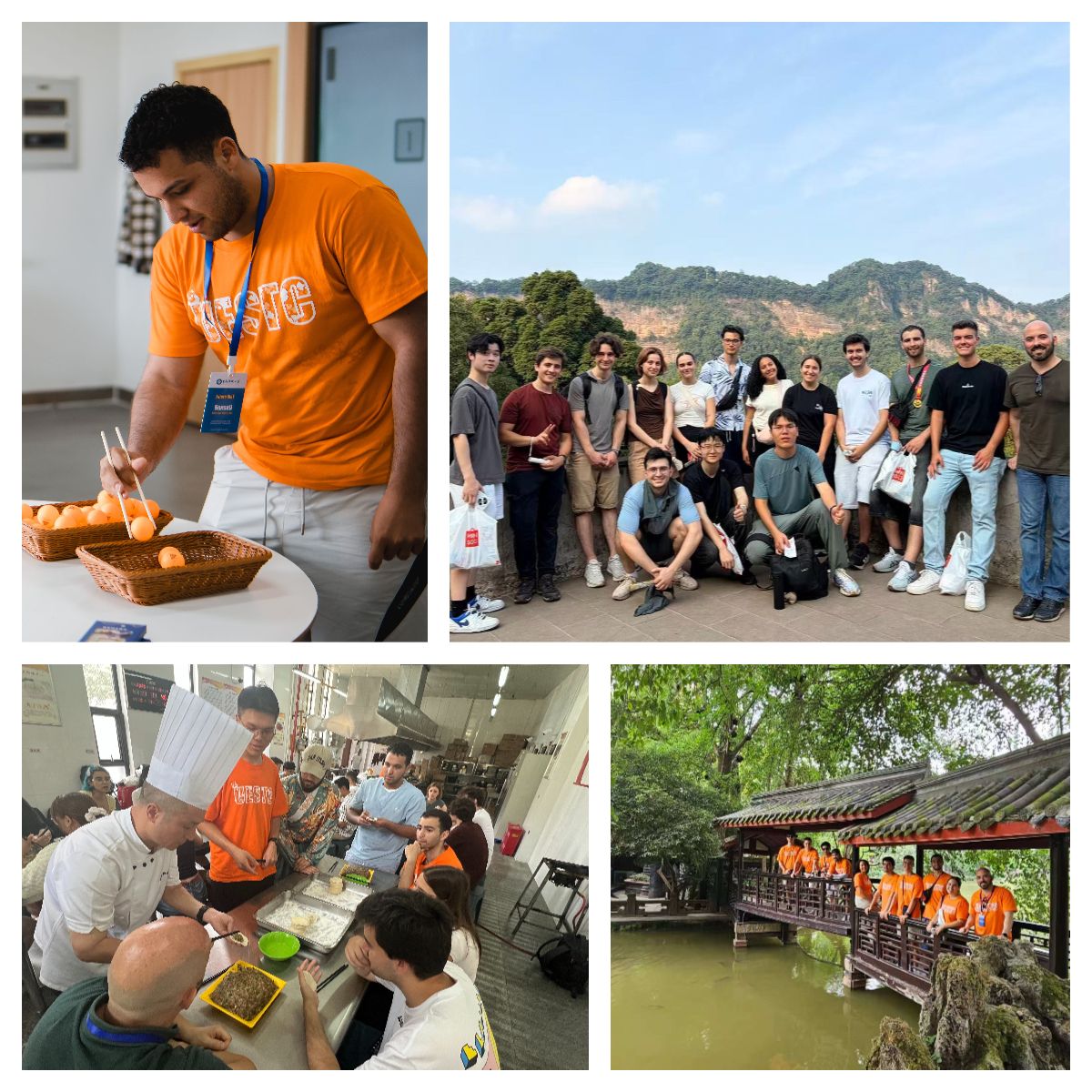
Beyond academics, a rich array of cultural experiences allowed participants to immerse themselves in the unique charm of the Bashu region. At the Chengdu Research Base of Giant Panda Breeding, students from around the world were captivated by the adorable giant pandas. At the Sichuan Cuisine Museum, they explored the culinary philosophy of “each dish with its own character, a hundred dishes with a hundred flavors” through taste. At the Chengdu Natural History Museum, students witnessed the epic story of Earth’s geological evolution and biodiversity.
The ever-popular “Dumpling Diplomacy” event drew enthusiastic participation once again. Chinese and international students gathered at Chaoyang Dining Hall to knead dough, roll wrappers, and fill dumplings together, bridging hearts in the warmth of shared cooking. During the study-abroad sharing tea session, students from different countries exchanged stories from their academic journeys and research aspirations, sparking vibrant intellectual exchanges in a relaxed and joyful atmosphere.
Collaborative Growth: Building a Global Community of Young Innovators
The participant cohort reflected remarkable diversity—engineering elites from Universidad Politécnica de Madrid, rising research talents from the National University of Singapore, Ph.D. candidates specializing in communications, and undergraduate students just beginning their academic journeys. Young scholars with varied academic backgrounds and life experiences converged here, creating the most dynamic landscape of the summer school.
During the final project presentation session, six student teams collaborated closely, integrating two weeks of learning into innovative outcomes spanning chip design, image processing, and communication algorithms. On the afternoon of July 17, the closing ceremony was held at the Lecture Hall of the School of Management and Economics. As students received their certificates of completion, the moment not only recognized their hard work but also marked the formal establishment of a cross-border academic friendship network. Representatives from the School of Information and Communication Engineering encouraged all participants to become pioneers of AIoT technological innovation and torchbearers of China–international friendship, continuing to advance hand in hand on their future research paths.
Looking Ahead
Although the 14-day 2026 “Future AIoT” International Summer School has drawn to a close, the exploration of technology empowering the future knows no end. UESTC will continue to uphold its motto of “Seek Truth, Pursue Excellence, Embrace Vision, Shoulder Responsibility,” leverage its disciplinary strengths in Information and Communication Engineering, and sustain the development of high-level international exchange platforms—inviting young talents from around the globe to join in answering the call of our era through scientific and technological innovation.