1. General Information
The Ubiquitous Wireless Networks International Joint Research Center is supported by the A+ national discipline of Information and Communication Engineering at the University of Electronic Science and Technology of China (UESTC) and the Sichuan Engineering Research Center for Smart IoT Communication Technology. The Center focuses on advancing research in ubiquitous wireless networks, intelligent IoT systems, intelligent connected vehicles, and high-speed optoelectronic communications, with an emphasis on interdisciplinary innovation and international collaboration.
The Center is currently engaged in five international cooperation projects at the national and provincial levels, with a total funding of 4.10 million RMB. These projects are conducted in partnership with leading institutions in the United Kingdom, the United States and other European countries, covering research topics including ultra-wideband optical transmission, optoelectronic integrated high-speed communication technologies, brain connectome analysis, intelligent flight vehicle communication and long-range RFID systems. Long-term collaborations with Bangor University, Harvard University, the University of Essex and the University of Pisa provide a solid foundation for sustained international cooperation.
The Center has a research team of 35 members, including an Academician of the European Academy of Sciences, a recipient of the National Distinguished Young Scholar award, two recipients of the Excellent Young Scientist Fund, three national specially appointed experts, a Young Changjiang Scholar, and an Emei Plan awardee. Research activities are carried out through three laboratories, the Smart IoT Laboratory, the Smart Vehicular Networks Laboratory, and the Intelligent Information Processing Laboratory. These laboratories form the core infrastructure of the Center and enable comprehensive support for interdisciplinary research, international cooperation, and talent development.
2. Research Directions
Research Direction 1: High-Speed Optoelectronic Integrated Communications
This direction focuses on the fundamental technologies that underpin next-generation high-capacity communication systems, including optoelectronic integration, optical and wireless convergence, and broadband transmission architectures. The research aims to enhance spectral efficiency, reduce latency, and support scalable high-speed communication infrastructures. This direction is supported by international cooperation projects with Bangor University and other partners, which advance high-speed optoelectronic communication technologies and ultra-wideband optical transmission systems.
Direction 2: Intelligent Wireless Networks and Autonomous Networked Systems
This direction investigates adaptive and intelligent wireless communication frameworks for dynamic and autonomous network environments. Research includes integrated sensing, communication and computing, collaborative wireless resource management, and communication technologies for intelligent mobility and low-altitude platforms. Ongoing collaborations with the University of Essex and the University of Pisa contribute to advances in intelligent flight vehicle communication, sensing–communication–computing coordination, and long-range RFID identification and localization in complex environments.
Direction 3: Intelligent Information Processing and Cross-Domain Sensing
This direction addresses multi-modal sensing, distributed information processing, and cross-domain data analysis to support intelligent decision-making across large-scale networked systems. The research explores the integration of perception, communication and computation to enable next-generation intelligent network architectures. Work in this area is supported by a national-level collaboration with Harvard University on cross-domain brain connectome analysis, which provides methodological insights into high-dimensional sensing and data integration.
3. Research Achievements
Significant progress has been achieved through sustained international collaborations of the Center. Since 2022, joint research with partners across Europe, the United States and Asia has resulted in more than one hundred SCI/EI-indexed publications, including articles published in leading journals such as IEEE Journal on Selected Areas in Communications and IEEE Transactions on Wireless Communications. These collaborative outputs span intelligent sensing, 6G network architectures, distributed computing, smart IoT systems and high-speed optoelectronic communications, reflecting the growing academic influence of the Center in advanced communication and information technologies.
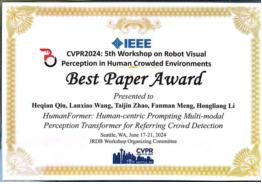
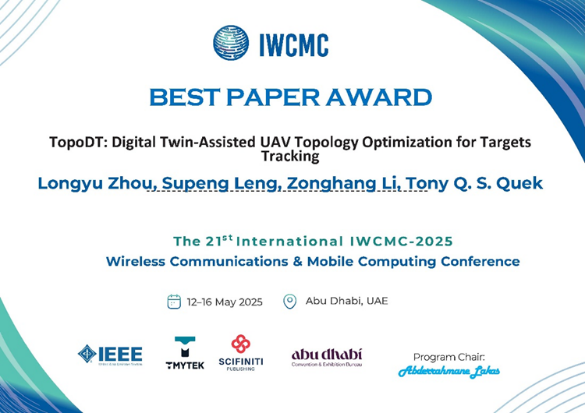
The quality and impact of collaborative efforts of the Center have been recognized through a series of prestigious international awards. Joint research with global partners has received the IEEE Industrial Electronics Society Best Paper Award (2023), the IEEE Vehicular Technology Society Best Vehicular Electronics Paper (2024), the CVPR Best Paper Award (2024), the IWCMC Best Paper Award (2025) and the EAI INISCOM Best Paper Award (2025). Collaborative work has also been presentedin oral at major international venues including ACM MM, AAAI, ICC, WCNC, ICME and NeurIPS, further enhancing the international visibility and academic standing of the Center.
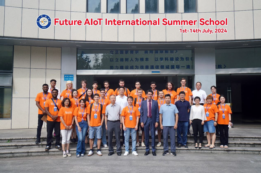
International engagement of the Center continues to expand through collaborative visits, academic exchanges and joint training programs. Partnerships with the University of Glasgow, the University of Strathclyde, the Institut National des Sciences Appliquées de Rouen and the University of Montpellier have supported ongoing cooperation and joint research activities. Regular international academic events are organized, bringing leading scholars from around the world to engage with research of the Center. These initiatives foster a globally oriented research culture and continue to advance the mission of the Center in international scientific cooperation and talent development.

备注:提供简介内容要求脱密处理,并经过实验室相关负责人审查通过后提交。